
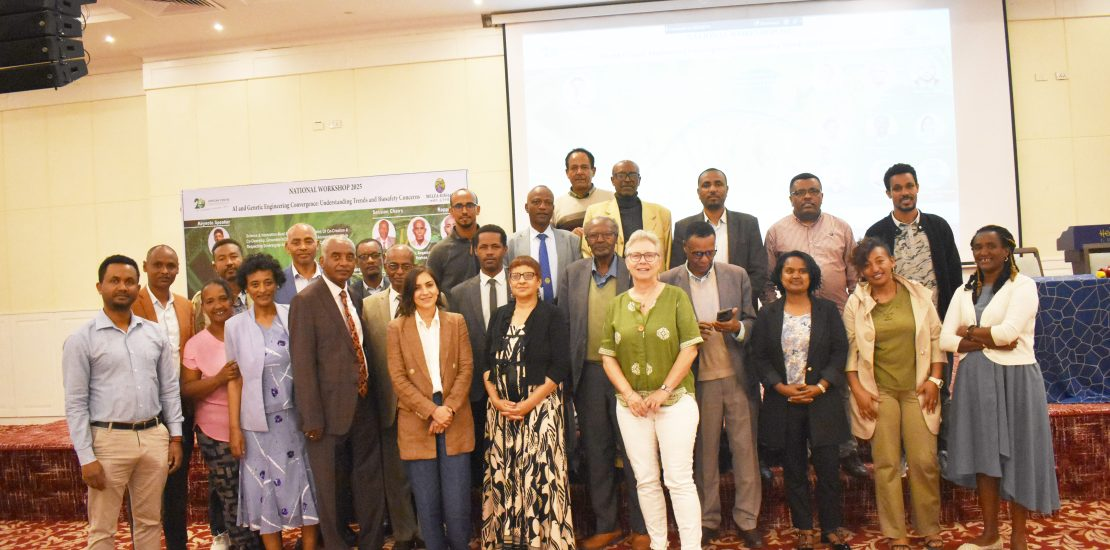
MELCA-Ethiopia hosted a successful two-day national workshop titled “AI and Genetic Engineering Convergence: Understanding, Trends, and Biosafety Concerns” from 30 September to 1 October 2025 at Haile Grand Hotel, Addis Ababa. The event convened scientists, policymakers, legal experts, civil society representatives, and development partners to critically examine the intersection of emerging technologies and their impact on Ethiopia’s agricultural and environmental governance. This workshop is part of MELCA-Ethiopia’s broader effort to foster informed, inclusive, and transparent dialogue around biosafety, and genetic engineering. It aimed to identify policy gaps in Ethiopia’s current regulatory framework, encourage ethical debates on science and technology, and support the national movement toward food sovereignty and sustainable agriculture.
Hon. Mrs. Frenesh Mekuria, Deputy Director General of the Environmental Protection Authority (EPA), officially opened the workshop, reaffirming the government’s commitment to biosafety under international agreements such as the Convention on Biological Diversity and the Cartagena Protocol. She stressed the importance of inter-agency collaboration and public involvement to ensure innovations contribute to Ethiopia’s resilience and food security. The keynote address, delivered by Ms. Mariam Mayet, Executive Director of the African Centre for Biodiversity (ACB), explored the opportunities and ethical challenges of AI and gene editing in Africa and developing nations. She called for increased African collaboration and capacity building to guarantee responsible and equitable use of these technologies.
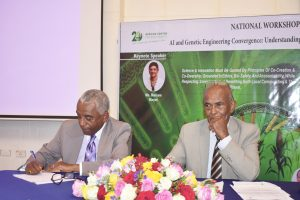
National Workshop on Artificial Intelligence, Genetic Engineering, and Biosafety
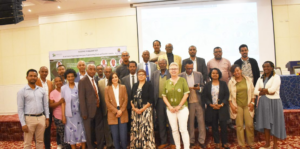
National Workshop on Artificial Intelligence, Genetic Engineering, and Biosafety
Practical lessons shared included organic cotton production as a locally led strategy to reduce pesticide use and boost farmer income. The importance of indigenous knowledge systems, community seed banks, and traditional breeding methods was also emphasized for building agricultural resilience amid technological uncertainty. Participants concluded that Ethiopia’s biosafety proclamation must evolve to keep pace with rapidly advancing technologies, including CRISPR and AI. This led to the development of the Addis Ababa Declaration on Artificial Intelligence and Genetic Engineering in Agriculture and Food Systems, advocating precautionary, science-based, and participatory governance. The declaration stresses transparency, accountability, and protection of Ethiopia’s agrobiodiversity as key to national food sovereignty.